Saturday, July 11, 2015

Celebrate this Week! 7.11.15


It's always good to end the week on a positive note.  Sometimes we concentrate on the negatives.  We have a choice.  Choose positive.  Choose to celebrate.  I will be joining Ruth Ayres and her weekly link-up, Celebrate This Week.  Check out all the other celebrations HERE

The title of this celebration is


#authorsarerockstars

I have to say, I've been completely lucky this week.  I've spent the majority of this week with amazing authors.  Every time I spend time with them, I'm reminded of how incredibly awesome they are.  I have them up on a pedestal.  To me, they are amazing.  They do something I just don't have the ability to do - write and illustrate prolifically.  And to top it off, they are some of the kindest, nicest, famous people I've ever met.  Here are some of the highlights:

* I sat next to Debbie Ohi at dinner Sunday night.  She is enthusiastic and funny - so wonderful to talk to.  I mentioned that Naked is my niece's favorite book and she asked to see a picture of her then drew a quick sketch with a message for her!

* I was lucky enough to hang out with Jess Keating again this year.  She is hilarious to talk to - she'll make you laugh over and over again.  She has the perfect middle grade voice in her books.  I can't wait to read Pink is for Blobfish and the next book in her Anna series.

* I met Josh Funk for the first time.  He spent so much time with us sharing his new books and talking publishing.  It was fascinating and he answered all of our questions so patiently! The best part is he read his new book Lady Pancake and Sir French Toast (pub. Sept. 1) to us.  There is something special when you hear a book read out loud by the author of the book.  I adored this book and can't wait to share it this fall.

* Lauren Castillo.  I met her.  Oh my gosh.  Major fan girl time!!  So sweet.  So kind.  Everyone you talked to had a story about how when they met her she was so nice and kind. She's an author I would love to hang out with.  Oh wait, my friends did.  So.  Lucky.

* Liesl Shurtliff sang to us in her author panel session.  She is so talented.

* Erin Downing is so fun to hang out with.  She is great to Skype with, but in person, well, first of all she is tall!  But she's another enthusiastic, fun person to be around!

* NerdCamp was Cassie Beasley's first big author signing.... I think she got A LOT of book love from us nerds!

* And these authors gave their time to NerdCamp Jr - an extension of NerdCamp for kids!

But my author fun didn't end there.

On Thursday we traveled to Naperville for more author fun at Anderson's.  We talked with Kristen Kittscher, Tricia Springstubb, Tracy Holczer, and Kate Hannigan.  They were so kind to my daughter and signed special notes for her.

Today we headed back to Anderson's to see more middle grade authors.  Ruth Bradshaw (Ellie McDoodle books) drew amazing pictures in my daughter's book and had everyone in the room sing happy birthday to her (it was her 10th bday).  We met Laurie Thompson who wrote Emmanuel's Dream.  My daughter and I did the Nerdy post for that book back in January.  We also met Tara Dairman, Jennifer Chambliss Bertman, Christine Hayes and Kevan Atteberry.  And.... we hung out with Lynda Mullaly Hunt.  Lynda is the reason we went down to Naperville and what my daughter chose to do for her birthday - she wanted to meet Lynda.  I was fortunate enough to have met her at NCTE and she is just the most kind and genuine author I've met.  Her heart is on her sleeve and she has an amazing appreciation for teachers.  I could sit and listen to her talk for hours.  I was so glad my daughter had the chance to meet her.  And Lynda came laden with birthday swag for my daughter!  So sweet.

I also want to quickly celebrate the awesomeness of Nerd Camp.  Everyone who is on the planning committee deserves a standing ovation.  It's an amazing event.
What made it double amazing for me was spending time with friends.  These are people that I may or may not have known a year ago, but over the year, I met and now through voxer, talk to everyday.  Most of us were able to be at Nerd Camp, and just had an amazing time.  Every minute I spent with them I will hold close to my heart.  Next year's camp will be on July 11-12.  I will most likely not be able to be there because my daughter will be going through limb lengthening surgery and rehab.  It makes me want to cry knowing I will miss the event, but I will have to hold the memories from this year even closer to my heart!  

I'm so grateful for NerdCamp and how it feeds my Nerdy heart!

Thursday, July 9, 2015

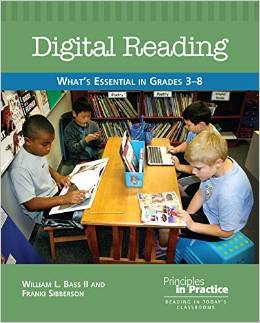
Digital Reading #cyberPD, chapters 1/2

Image result for #cyberpd          Digital Reading: What's Essential in Grades 3-8

Follow along with our Google+ community and learn from #cyberPD.
This summer we will be reading Digital Reading by Franki Sibberson and Bill Bass.
Thank you to Michelle Nero, Cathy Mere, and Laura Komos for setting up this learning community!

As I read this book, I'm thinking about the information I want to share with my colleagues.  As a literacy specialist/coach, I hope to use my learning to inspire others to try something new!  As I write my posts, I'm thinking of what I want to share.  I don't want to summarize the chapters, that can get too long.  But what are the points that stick to me the most?  What are the big picture notes that will inspire teaching to reach students?  That's what I'm writing about.  

Chapter 1:  Defining Digital Reading

Points mentioned in the text and what I see happening in schools:
* kids are more and more familiar with digital devices and how to use them
* BUT kids don't know how to use them to further learning
* knowing how to use an app, how to create folders, how to play games is not digital learning.
* As stated on page 6, "Just because students are "good" with technology does not necessarily mean they are literate in the digital age."

What is digital literacy?
* being intentional with digital tools
* knowing what to use to enhance learning
* integrating information between devices and pages
* being intentional with all learning texts

Questions I'm pondering:
* how do teachers move from using apps to reinforce to using digital tools in an intentional way?
* I heard Kristin Ziemke talk at AllWrite and she talked about picking a few apps that are good and intentional in their use and get good at those.  But what works best, especially in 3/4gr?
* how do I take reading on a device to the next level?
* what are some digital tools, sites, apps that I can use in my teaching?


Chapter 2:  From Reading Workshop to Digital Reading Workshop

We're in the process of changing towards a workshop model.  This is a perfect time to integrate digital technology, since everything is new.  I think in order to do it right, we need to slowly integrate technology - what are the parts we can add?  What would someone who is overwhelmed be comfortable adding?  Where would the starting points be?

I want to remember:
The structural components of reading workshop:

  • mini-lessons
  • independent reading
  • individual conferences
  • small-group instruction
  • share session and opportunities for response
  • assessment that informs instruction
Questions I'm pondering:
Franki shares questions she asked herself when thinking about the types of reading she does in her class.  
Questions I would ask a teacher who is just beginning the digital reading journey:
Read-Aloud
  • Do I only read aloud texts that are from traditional books or do I share digital texts? audio books? blog posts?
  • Do we use web resources such as author websites and book trailers to help us dig deeper into the book we are reading?
  • How do we connect with authors whose work we read?
  • How do we connect with other classes who are reading/have read the same text?
  • How do we track our thinking during read-aloud?  Do I use a variety of tools or only easel and chart paper?
  • Do we connect with the authors of any of the things we read to extend the conversation?
Independent Reading/Reading Conferences
  • Do we use online resources for book previewing and book selection?
  • Do students have digital options during reading time?
  • Are students connected to others because of their reading (a social component)?
  • Do students know where to go to find information?
  • Are students intentional as readers or are they passive consumers?
  • What habits are students developing behind those of traditional readers?
  • Do I value all of the reading that students do at school and at home?
Reading Mini-Lessons
  • Do I use digital texts as well as traditional texts when teaching mini-lessons?
  • Do I share my own process, consuming and composing in several types of media?
  • Do I use mini-lesson time to demonstrate tools?
Shared Reading
  • How can I include a variety of texts for students to process together?
Content Reading
  • Have I found sources for content reading that go beyond textbooks and traditional texts?
  • Do I rely on traditional texts or do I use sites?
  • How am I supporting the importance of visual information in the content areas?
  • How do we build understanding across different forms of media?
  • How do we connect information to synthesize understanding?
My next steps:
From the above questions, there are a few (not many!) that I have implemented.  But, how do I hand off what I have done to teachers so they feel successful in those areas?  
With such a long list of questions, I'd like to concentrate  on the read-aloud and content reading first.  Many of the questions in the read-aloud question I've tried and/or dabbled with.  Many of our classes have had some experience with it, but I'd like to help teachers set up the tools they need to feel confident to do more themselves (Skype visits, tweeting authors, class blogging, sharing blogging, biblionasium sites).  I have not used digital texts at all, so this is something I'd like to try more.
Along with that, I think using digital texts and sites for content reading is another area I'd like to expand, first with myself, then sharing with teachers.  I am very interested in the idea of using digital media for writing and using multiple texts (traditional and digital) and synthesizing information.

Are you a coach?  Where would you start?
Are you a classroom teachers?  What areas do you think someone who is just starting this journey would want to concentrate on first?

Wednesday, July 8, 2015

Nonfiction Picture Book Wednesday 7.08.15

#nfpb2015

I am excited to join Alyson Beecher and other friends in this weekly challenge.  Finding great nonfiction picture books isn't a challenge anymore, there are so many wonderful books to be read now!  The challenge is sharing them with as many people as possible so they can find this wealth of literature to share with our young readers.  Thanks to Aly for starting this weekly link-up and thanks to all who join in!  See all of the posts at kidlitfrenzy.


A few weeks ago I wrote about the "Boy Were We Wrong" series by Kathleen Kudlinski here.  Yesterday was the book birthday for the newest book in her series, Boy Were We Wrong About the Weather.  

Boy, Were We Wrong About the Weather!

I was thrilled to have Kathleen send me an early copy of her book.  Written in the same format as the other books in her series, where a series of misconceptions are introduced and new learning is shown.

I think this series is perfect for sharing when starting a new unit on the topic.  How perfect to start a chart and have students write down everything they think they know about the topic.  After sharing the book, there will probably be a few ideas that need to be changed, and you can show how even scientists have to change their thinking.

Even more so than the other two titles in this series, I think students will really enjoy Weather because it's a topic that many of them have more background knowledge and first hand experience about. Kudlinski discusses what affects the weather.  We used to think there were four elements - a mix of earth, air, wind and fire.  I bet a lot of students would agree with that.  These are commonly known elements.  But, Kudlinski goes on to explain there is more than that, there is the sun, mountains, volcanoes, and cities that affect weather! 

I like that this book even explains where some of the terminology comes from.  For example, the word 'hurricane' came from when Spanish explorers sailed across the Atlantic and encountered the worst storms they have ever seen.  The Tai'no Indians told them the storms were the work of their storm god, Huracan.  Kudlinski goes on to explain how now we know what hurricanes are, how they are made, and how to use modern equipment to be able to predict when a hurricane is going to occur and to warm people.

The third book in the series was illustrated by Sebastia' Serra.  The illustrations are colorful and will appeal to young readers.

Ms. Kudlinski was kind enough to send me the F&G of the next book in the series, Boy, Were We Wrong About the Human Body, coming out October 20, 2015.  The first pages alone are going to hook a lot of readers!  

I hope you look out for all of the books in this series.  They are wonderful to read and explore.

Saturday, July 4, 2015

Celebrate This Week 7.04.15


It's always good to end the week on a positive note.  Sometimes we concentrate on the negatives.  We have a choice.  Choose positive.  Choose to celebrate.  I will be joining Ruth Ayres and her weekly link-up, Celebrate This Week.  Check out all the other celebrations HERE

Just quick celebrations for now!

Celebration #1
It's time to leave for nErDcampMI!!!!  I can't believe how many friends I've met since last year.  I went last year having only spoken with people over Twitter, and now it's a reunion party!  I'm so excited to be with friends - time together instead of conversations over an app or discussions in 140 characters or less!  Oh yeah, and I bet I'll learn from all of them too!

Celebration #2
Happy 4th of July!  Today will be spent with friends and family.  After a quick run, we always go to the 4th of July parade in the town I grew up.  It's tradition for us and so fun now that our family has grown.  Then it's time in the car (on the expressway, so at least I can read in the passenger seat!) to go see extended family.  Then back home for fireworks.  It's a day that is rich in tradition and I know it will be fun.

I hope everyone has a safe, happy and healthy 4th and you spend time doing something you enjoy!

Friday, July 3, 2015

Writing About Reading - professional literature

Writing about Reading: From Book Talk to Literary Essays, Grades 3-8
Writing About Reading:
From Book Talk to Literary Essays, Grades 3-8
by Janet Angelillo
Heinemann

I just finished reading Janet Angelillo's book Writing About Reading.  This book was recommended to me a couple of years ago, but I finally got around to reading it because of the push of my voxer group.  I really appreciated having people to discuss and share ideas from this book.  Talk is so important when reading professional literature, whether it's written talk (through google docs) or voxer, all conversations make me stop and think.

This year, after our students took the PARCC assessment, I noticed that writing (and/or typing) responses to reading is still an area of concern.  Having to read, come up with thoughts, organize it and type a well-written response is hard!  This really is a concept that needs to be taught all year.  This is not to say our students never had to respond to reading this year!  But I think it's area we can learn and grow out thinking.

My biggest takeaways from this book (in a very short and brief description):
  • modeling writing about reading should start at the very beginning of the year
  • your first read aloud of the year is so important!  Here's where you will begin your modeling of writing about reading.  Think about what you want students to track.
  • Model model model and then model some more - how do you write quick thoughts down on post-its and leave that thinking in your book?
  • After the book - or important for younger readers, after a few chapters - go back and look at the post it notes... What are you noticing about your thinking?  Is there a train of thought you want to follow?   A pattern?  
  • Start modeling how you can take a thought on a post-it note and write longer in your notebook about that thought.  Incorporate evidence to support that one little thought.
  • The importance of teaching literary terms - narrator, conflict, resolution, rising action, etc.  So important for students so they have a vocabulary base that they can use once they need to write about their reading.
  • Connecting texts to texts.  Look for commonalities between characters, character feelings, character's views, themes and issues.
  • Note landmark texts - those books that make you think, cry, feel.  
  • Assess assess assess.  If you do not assess, you are not teaching.  You are giving activities to complete without seeing students thinking.
I've seen other teachers discuss how they have a "write about reading" day once a week during writer's workshop time.  It's not a set day, it can float and be used whenever appropriate throughout the week.  It's important to note that this is not something you do just at the beginning of the year.  It's something you assess throughout the year and see where the needs are and cultivate your minilessons from them.

This is a great book to add to your writing professional literature library!

Wednesday, July 1, 2015

Nonfiction Picture Book Wednesday 7.01.15

#nfpb2015

I am excited to join Alyson Beecher and other friends in this weekly challenge.  Finding great nonfiction picture books isn't a challenge anymore, there are so many wonderful books to be read now!  The challenge is sharing them with as many people as possible so they can find this wealth of literature to share with our young readers.  Thanks to Aly for starting this weekly link-up and thanks to all who join in!  See all of the posts at kidlitfrenzy.

Capstone has been busy lately.  They have been adding a lot of books to their collection - both nonfiction and fiction and many different series - but they've also added a lot to their digital literacy with their Pebble Go program.  Melissa Stewart wrote a great post about it last week. 

I recently found a new biography series by them for younger readers.  The two series that I found at my library were Great African-Americans and Great Women in History.  The books are intended for students reading at approximately second grade reading level (levels K-N). The books are divided into chapters, and each chapter heading is in chronological order with titles that make clear sense to young readers - "Early Life", "Young Adult", "Life's Work", "Later Years" are some examples.  At the bottom is a running timeline.  Each biography starts with a strong introduction and conclusion.  Some of the introductions went right into the person's early life with a quick summary sentence about what they were famous for.  The conclusion also summarized why their life had been important.

The end notes includes a glossary, index and information about where to find more information (in books) and an internet site that is sponsored by Capstone.  This site allows you to search by subject or by a book code.  For example, after reading the Booker T. Washington book, there is a code in the back that you can enter into facthound.com.  This code leads to other websites about the subject.  The websites have all been checked out by the publisher, although I did find that some of the websites opened up ads, if you allow popups.  Some of the books include "critical thinking questions using the common core".  The questions do align with CCSS (it also tells you which type of standard the question addresses) and can be used in a discussion.

These books would be great to use in a primary level classroom when doing a biography unit.  The books are engaging and easy to read.  Whether using them for research or for interest, they would be a welcome addition!

Some of the books in the series:


Booker T. Washington       Sally Ride       Clara Barton

Today is also the day we're checking in for our #mustreadin2015 books!  I wrote about setting goals and what they mean to me in this challenge.  Check out my post here.

Must Read 2015 logo

#mustreadin2015 July 1 update

Must Read 2015 logo

I've been linking up this year with Carrie Gelson and many other bloggers to keep track of our #mustreadin2015 books and goals.  You can check out other bloggers lists at www.thereisabookforthat.com. 

Goals.  We make them all the time.  Sometimes we make them with the intent of hitting our goal.  Sometimes we make them because it sounded like a good idea.  
Goals give us something to work towards.  It's a target.  As Rick Stiggens stated in 2004, "Students can hit any target that holds still for them."  
I give myself a reading goal because it's something I intend to accomplish.  My current reading list is large.  Will I finish all of them?  I'll let you know December 31 :)  Am I going to be upset if I don't?  No, because I am taking this time to reflect.  I can see that I am working on my goal.  I can see what I still need to do in order to accomplish my goal.  What if I don't hit it in December?  I will look at my journey and reflect more.
As Jennifer Serravallo tells us, if a student cannot hit a goal that we set in front of them, it may be because we set the goal too high.  We need to see what a student can do, and see what the next step is.  Looking at my list, I may have set my goal a bit too high.  But what can I do?  Well, I've read 22 books.  I'm going to aim to read another 22 before the end of the year.  And maybe, just maybe, we'll see if I can completely hit the target!
I challenge all readers to reflect on their goals!  We ask our students to do this, shouldn't we do it as well?

Books that are coming out in 2015
Wish Girl by Niki Loftin read 5.14.15
Bone Gap by Laura Ruby
All the Bright Places by Jennifer Niven read 1.21.15
The Way to Stay in Destiny by Augusta Scattergood read 1.04.15
How to Outswim a Shark Without a Snorkel by Jess Keating read 1.02.15
Stella by Starlight by Sharon Draper read 2.04.15
The Terrible Two by Mac Barnett and Jory John read 2.23.15
In the Unlikely Event by Judy Blume
Finding Serendipity by Angelica Banks
Jack by Liesl Shirtliff read 5.07.15
The Honest Truth by Dan Gemeinhart
Cody and the Fountain of Happiness by Tricia Springstubb
Lost in the Sun by Lisa Graff
Mark of the Thief by Jennifer Nielsen read 3.05.15
The Island of Dr. Libris by Chris Grabenstein
The Quirks and the Quirkalicious Birthday by Erin Soderberg
All Fall Down by Ally Carter
Echo by Pam Munoz Ryan read 5.01.15

Books that are part of a series
Five, Six, Seven, Nate! by Tim Federle listened to 6.19.15
That Shadow Throne by Jennifer Nielsen read 2.22.15
Countdown by Deborah Wiles read 6.13.15
Revolution by Deborah Wiles read 6.21.15
The Penderwicks by Jeanne Birdsall
Villainous by Matthew Cody
The Riverman by Aaron Starmer read 4.10.15
Always Abigail by Nancy Cavanaugh
Cinder by Marissa Meyer

Books that are on the IL 2015 Bluestem list
Wonderstruck by Brian Selznick
Liar and Spy by Rebecca Stead
A Dog Called Homeless by Sarah Lean read 4.04.15
Amulet The Stonekeeper by Kazu Kibuishi read 3.27.15

Books that have Newbery buzz
Greenglass House by Kate Milford read 1.29.15
West of the Moon by Margi Preus

Books that I haven't read and I really want to
The Brilliant Fall of Gianna Z. by Kate Messner read 1.10.15
Glory Be by August Scattergood
The Secret Hum of a Daisy by Tracy Holczer
The Spy Catchers of Maple Hill by Megan Blakemore
The Mark of the Dragonfly by Jaleigh Johnson
Rules by Cynthia Lord read 6.23.15
How to Steal a Dog by Barbara O'Connor
Peter Nimble and His Fantastic Eyes by Jonathan Auxier
Under the Egg by Laura Marx Fitzgerald
Ophelia and the Marvelous Boy by Karen Foxlee
The Nightingale's Nest by Niki Loftin
The Meaning of Maggie by Megan Jean Sovern
Nest by Esther Ehrlich
Fleabrain Loves Franny by Joanne Rocklin
Upside Down in the Middle of Nowhere by Julie T. Lamana
The Power of Poppy Pendle by Natasha Lowe

Young Adults
The Impossible Knife of Memory by Laurie Halse Anderson read 7.01.15
I'll Give You the Sun by Jandy Nelson read 6.27.15
The Raven Boys by Maggie Stiefvater

Non-Fiction
The Family Romanov by Candace Fleming

Transitional Chapter Books
Lulu's Mysterious Mission by Judith Viorst read 3.24.15

Adult Reads
Wild Things! by Betsy Bird, Julie Danielson, Peter D. Sieruta
Landline by Rainbow Rowell
One Plus One by Jojo Moyes
The Silkworm by Robert Galbraith
Best to Laugh by Lorna Landvik

So, as of July 1, I've read 22/59.  I have 37 more to read.  Hmmmmm.....
Next on my list is the new Judy Blume!

Are nonfiction picture books on your list to read?  Take a look at this picture book biography collection I found here.  Find more NFPB love at kidlitfrenzy.com  I promise you'll find something else to add to your reading list!