Thursday, July 23, 2015

Digital Reading #cyberpd Chapters 6-7

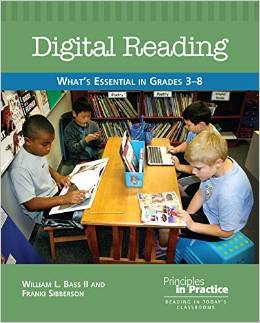
Image result for #cyberpd          Digital Reading: What's Essential in Grades 3-8

Follow along with our Google+ community and learn from #cyberPD.
This summer we will be reading Digital Reading by Franki Sibberson and Bill Bass.
Thank you to Michelle Nero, Cathy Mere, and Laura Komos for setting up this learning community!

As I read this book, I'm thinking about the information I want to share with my colleagues.  As a literacy specialist/coach, I hope to use my learning to inspire others to try something new!  As I write my posts, I'm thinking of what I want to share.  I don't want to summarize the chapters, that can get too long.  But what are the points that stick to me the most?  What are the big picture notes that will inspire teaching to reach students?  That's what I'm writing about.

Chapter 6:  Assessment: Keeping OurEye on the Literacy
Chapter 7: Beyond the Classroom Walls: Connecting Digital Reading at Home and School

I think the name of chapter 6 is perfect because it encompasses what this book has strived for - being authentic.  Just as we need to be authentic and purposeful in our selection of what students use for their digital reading and understanding, we need to stay the course when thinking about assessment.


I felt like this quote was such an important reminder of what assessment is.  It's NOT, something we do before report cards or three times each year.  It shouldn't give us an end result, but help us understand student learning, and give us next steps.  As Franki and Bill say, "assessment techniques should be about moving readers forward in their learning." pg. 90.

When thinking about assessment, the authors included a list of ongoing assessment ideas.  How many of these do you use?
  • kidwatching
  • taking notes while conferring
  • analyzing written response
  • examining student annotations
  • listening in on conversations
  • analyzing miscues and oral reading
  • talking to students about their own goals
  • collecting artifacts and written responses to reading
  • synthesizing use of strategies for understading
Purple highlights are things I'm doing well at.  Yellow highlights are things I would like to improve upon this year.

Next Steps
  • I'd really like to try Evernote out.  I've said that for over a year now, but I think if we truly are doing ongoing assessments, there needs to be a common place to store information.
  • I like the possibilities of a classroom Twitter account.

This book has really pushed my thinking about digital reading and what it means.  I have some new ideas and new steps to take this year.
What were your big takeaways?  Mine is being authentic.  How can I use digital tools authentically?  What are the sites and apps that are going to push student learning?  I have a few to try this year!


Tuesday, July 21, 2015

SoLSC What identifies you? 7.21.15


Slice of Life is a weekly event hosted by Two Writing Teachers.


"What identifies you?"

Who are you?  When someone describes you, what do they start with?  Are you the person that......?  Are you the guy that always.....?

"Where is the girl with the leg?"

Two weekends ago my daughter had a swim meet.  It was all weekend - Friday through Sunday - but she didn't swim on Saturday because it was her birthday.  She had made the choice to do something else to celebrate {meet Lynda Mullaly Hunt, actually}.  

On Sunday, her swim friends told her a story.

"Where is the girl with the leg?"

That's what they were asked by a swimmer from another team.  

Of course, her swim friends knew who they were referring to, but their response was matter of fact. 

"It's her birthday and she's not here today."

That was the end of the conversation and story.  

To other people, that's who my daughter is.  The girl with the leg.  Yup, it's shorter than the other leg.  Yup it has many many scars on it.  Yup, her lower leg is thinner and her foot is smaller in size.

No, it's not who she is.

To me, she's a stubborn kid.  She fights for what she really wants (usually a new song or app, not books, she knows mom has that covered).  She's affectionate.  She'll still hold my hand from time to time and expects a hug and kiss every night.  She's someone who wants to be right all the time and it's hard for her to admit when she's wrong.  No idea where she got that...  For her, swimming centers her.  She knows that about herself and because of that she always wants to be in the water.

If you ask her friends, they would say she's loyal.  If you know she's your friend, she stays your friend until you don't want her (it happens).  She's a hard worker.  She does what everyone else does.  She's silly.  She plays and makes up stories.

Every four years, she has to leave for months and comes back with a longer leg, so yes, she is the girl with the leg.  But even when she's gone, she's still that same kid that I see and her friends see.  

Why do we see what is apparent on the outside and not wait and think about the inside?  I ask that question even though I know I sometimes do the same thing.

Next time you find yourself doing that, ask, is that the girl with the leg?  and then change the question.  What is the story inside that girl?  Is that the guy that has a story that is waiting to be told?  I wonder what we find out instead.

Monday, July 20, 2015

It's Moday! What Are You Reading? 7.20.15

This weekly post comes from Jen at Teach Mentor Texts and Kellee and Ricki at Unleashing Readers.  It's a great source to find new books to use with your students.

Why is it summer time and I'm having a horrible time staying caught up with my reading?  I've been spending a lot of time reading and writing about some professional reading and learning and I guess that is cutting into my time.  I've been trying to be very sneaky and get some picture books in when I can to up my #bookaday count!

Picture Books

Beach House
Beach House by Deanna Caswell
4/5 stars
What a perfect summertime read!  This book captures a small moment of a family arriving at their beach house and that feeling of getting to a new place but having to be responsible first - unloading and unpacking - before the fun begins.  Told in rhyme, the rolling language and beautiful watercolor and pencil illustrations by Amy June Bates, this book is a sure fire hit for summer!

My Dog Is the Best
My Dog is the Best by Laurie Ann Thompson
4/5 stars
I love this early reader picture book!  I think there are some great possibilities for this book that I wrote in this post.

If You Ever Want to Bring an Alligator to School, Don't!
If You Ever Want to Bring an Alligator to School, Don't! by Elise Parsley
4/5 stars
Super cute school story.  Loved the illustrations.  I'll be reading this to students at the beginning of the school year.

Middle Grade

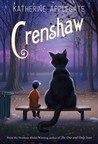
Crenshaw
Crenshaw by Katherine Applegate
5/5 stars
Katherine Applegate amazed me with Ivan.  Her ability to make Ivan say just enough and leave the rest up for the reader to figure out.
She does the same thing with Crenshaw, but with a different voice.  This time Jackson is our narrator, a young boy who is faced with problems that are too big for him.   Jackson teeters on the line of being too young to understand, but smart enough to figure it out.  That's where the magic fits in.  Crenshaw, Jackson's invisible friend from years ago, makes a return.  And sometimes, magic is what you need.
Beautiful story that echoes the magic found in Beekle by Dan Santat and Yard Sale by Eve Bunting.  
This book is a must reread on Sept. 22!

Transitional Chapter Books

Judy Moody and Stink: The Wishbone Wish
Judy Moody and Stink and the Wishbone Wish by Megan McDonald
4/5 stars
Thanksgiving is a time for traditions and this book has plenty of them.  I love how McDonald stays true to Judy's personality while fitting her into timeless acts of Thanksgiving.
Sure to be a fall favorite.  Publishes Sept. 8.

Danger in Ancient Rome (Ranger in Time, #2)
Ranger in Time - Danger in Ancient Rome by Kate Messner
4/5 stars
I enjoyed this Ranger story even more than the first one.  There was more fast paced action and excitement that will keep students turning the page.  I'm really looking forward to book 3 where Ranger helps on the Underground Railroad!

Adult Reads

In the Unlikely Event
In the Unlikely Event by Judy Blume
5/5 stars
Judy Blume never fails to amaze me with her talent.  I loved reading this adult novel - the woman still has it!
It was even more fun reading Kathleen Krull's new book - Women Who Broke the Rules - Judy Blume, after reading this new novel!  I wrote about this new series this past Wednesday.

Currently Reading

Goodbye Stranger
Goodbye Stranger by Rebecca Stead
This is actually my first Stead book, although I have another one in my #mustreadin2015 pile.  I'm really enjoying this one, so far.

The Evolution of Calpurnia Tate (Calpurnia Tate, #1)
The Evolution of Calpurnia Tate by Jacqueline Kelly
Still reading it.  I went from listening to reading it.  I listened to 2/3 of it on the way to and from NerdCamp.  For me, this book did not work for an audio.  I had a very hard time paying attention, I think because there is not a whole lot of dialogue or action.  I know there is so much book love for this book and I've read how everyone loves the writing.  I'm hoping by switching to reading it, I may fall in love with it more.  Right now I'm not all that interested.  I really do think audios can make or break a book.  Read below!

Finished Listening With My Ears

Echo
Echo by Pam Muñoz Ryan
5/5 stars
I loved reading this book, but listening to it brought it to a whole other level of enjoyment!  There were 4 different narrators and there was music.  I loved the piano and harmonica accompaniment to the words.  My daughter listened with me and loved the stories.  I think had she read this book on her own, she would not have been as engaged.  She is not one to enjoy historical fiction, and I don't think she would have stayed with the book at this age.  But with the music and different storytellers, she always wanted to listen in the car.
For me, this book worked better as an audio than a written text.

I cannot believe it's already the middle of July.  I have so many books I want to read before school starts, and so little time.  I'm already thinking ahead to Mock Newbery time.  We've started a new voxer thread to talk Newbery and I have many books I want to read to prepare for it.  Have you thought about Newbery time?  Any books you would put on a Newbery list yet?  Please leave titles in the comments!

Happy Reading!

Friday, July 17, 2015

New book to use with early readers!

My Dog Is the Best
My Dog is the Best
by Laurie AnnThompson
illus by Paul Schmid


Back in the fall, The Educator's Collaborative did their first "PD in your PJ's" series of workshops.  The one that was not only the most meaningful to me, but made me think long after it was over was Kathy Collins'.  She talked about a subject that has made me ponder a lot - getting those young kids to be thinking about their early reader books and understanding it more than just reading the quick, easy text.  If you missed her workshop and teach younger students, I highly recommend watching it.  Here's the link.  In her workshop, Kathy shows a menu that can be used with young readers that gives them ideas of how to go back and revisit a text.  I think I found a fantastic book that teachers can use to show many of these ideas.

Over the weekend, I had the pleasure of meeting Laurie Ann Thompson, author of the book My Dog is the Best.  I first came across Laurie's work this winter when Emmanuel's Dream was published.  This book is near and dear to my heart since it is about how a child born with a physical disability overcame and became known not for his disability, but for the work he has done.  My daughter and I did the Nerdy Book Club post for it.

I had quickly read My Dog is the Best at ALA Midwinter, but finally sat down and read it again this week.  I had time to think about the text, the illustrations, how they worked together and the message of the text.  It made me think of Kathy's presentation, probably because the book she used is about a dog and so is this one!  Both have easier texts and words that can be decoded by early readers.  This illustrations help readers understand the text and will therefore be a book that is accessible for those early readers.

Books like these are hard to come by.  Oftentimes, the easier the text, the more boring and dry the book.  This book will hold readers' attention because of the subject matter and the endearing illustrations.  

I can see teachers of primary grades using this text to show students how to synthesize what the story is about - no, it's not about their favorite page or just about the dog being the best.  This is a text that teachers can go back and revisit and look at the illustrations and what new information do they get by going back and looking at them for a second time.

It is a delightful book and one I plan on using this fall!

Thursday, July 16, 2015

Digital Reading #cyberpd Chapters 3-5

Image result for #cyberpd          Digital Reading: What's Essential in Grades 3-8

Follow along with our Google+ community and learn from #cyberPD.
This summer we will be reading Digital Reading by Franki Sibberson and Bill Bass.
Thank you to Michelle Nero, Cathy Mere, and Laura Komos for setting up this learning community!

As I read this book, I'm thinking about the information I want to share with my colleagues.  As a literacy specialist/coach, I hope to use my learning to inspire others to try something new!  As I write my posts, I'm thinking of what I want to share.  I don't want to summarize the chapters, that can get too long.  But what are the points that stick to me the most?  What are the big picture notes that will inspire teaching to reach students?  That's what I'm writing about.

Authenticity

I knew this chapter was going to be a good one after reading the title.  I wrote about this last week, how do we push students to use digital tools in a way that pushes their thinking and is authentic in use?

There were two quotes that made me pause and think about the idea of digital literacy and my beliefs.

pg. 34 "When technology is used in a way that authentically enhances the work of the classroom, the students achieve and acquire another layer of learning - and enjoy the experience and process more deeply."
This quote was really important to me because I feel when you have any kind of authentic learning, you push students to the next level.  When it's authentic, it means something to them that will stick to them - not be something they've done once, or done in isolation.

pg. 40 "Learning the capabilities of tools while using them in authentic ways makes the most sense for all of us.  Those are the experiences that tend to stick with us.  We don't need to know the minute details of every program we run across.  We need to know enough to get us going, and we learn what we need as we need it."
This was such an important thought for me because my instinct is to teach students everything about something new.  But i think once you get them going, the students will figure out how the tool works best for them.  And if they don't, then we step in and conference.
I really liked the next idea by Ann Marie Corgill about introducing a tech idea in the Morning Meeting time.  I still want to think about where is the most authentic way to introduce new tools, but sometimes this might be an interesting time and place to do it!

As usual, Franki and Bill asked some questions and gave some definitions that make me really think.

from pg. 29:
Authenticity means that readers:
  • do the same reading work in classrooms that they do in the world outside of the classroom
  • have choice in the ways they read and respond to their reading
  • own the reading decisions they make; they are not doing things for the sake of an assignment or project
  • care about the reading work they are doing because it is personal
  • use digital tools as needed based on their purpose
  • learn digital tools in the midst of learning experiences, not as a separate experience
I feel like this list is almost able to be used as a rubric!  I think teachers can take a project and ask themselves these questions.
Start with a project that may need some tweaking.  Using the definition above, what is 1 area that can be changed to make it more authentic?

Teachers as digital readers
The questions on page 30 are really important to reflect upon.  Most teachers teach reading at some point in their day.  Many teachers are trying to incorporate digital reading in their teaching day.  But how many of those teachers are readers themselves?  How many of them have digital reading lives?  How many teachers reflect upon their reading lives?  Sibberson and Bass include a list of questions that are perfect to ponder.  The ones I think are relevant to start with include:

  • What changes have I've noticed in my reading habits over the past several years?
  • What am I most surprised about when it comes to the ways my reading has changed?
  • What devices do I rely on as a reader?
  • Are there certain sites and apps that I visit regularly as a reader?
  • How do I respond to my reading?
  • Am I part of any social networks as a way to respond as a reader?
  • Have I connected with authors or other readers in new ways?
Next Steps
Franki mentioned some different websites and apps that I would like to try.  Corculous and Popplet have me intrigued to use for responses.  As I prepare for my next book club meeting, I think I'm going to try one of them out.  Franki mentions in the chapter, until we go through the steps of what we're asking students to do, can we really make a decision on the authenticity of the device/site.

Intentional Decision Makers

Hand in hand with authenticity is being an intentional decision maker.

When thinking about making intentional decisions between digital and textual reading, there were a few statements that stood out to me that I would hold true.
pg. 47 "We know that for our students, being digital readers means being able to navigate intentionally between print and digital resources."
pg. 47 "Intentionality is the difference between thoughtful understanding and random clicking and scanning."
pg. 48 "Keeping our eye on literacy while embedding the tools naturally in the curriculum seems to be the most critical component in our students' learning."

What this means to me:
I don't have time in my life to do things for the sake of doing them.  There needs to be a reason and purpose for most things that I do.  We only have students at school for a small amount of time.  Our teaching needs to be intentional and we need to have a purpose.   If we can hold on to those beliefs when teaching between digital and textual reading, our students will become intentional decision makers instead of clickers and scanners.  Finding the right time in the day and what teachers are teaching will make a vast difference when teaching students about how to use a tool or device.  I think a great time for students to explain what they used and why they did is at the end of workshop time during the sharing portion.

A rubric/checklist for thinking about making intentional decisions:
The questions that were posed that I would use as a beginner of this would include:

  • How do the sites and apps that we share with students help them to become better readers and writers?
  • Do the sites and apps we introduce to students dictate how they engage with a text, or do readers have choices to make?
  • Are all students expected to do the same tasks on digital tools, or are they given choices in how to complete their assignments?
Next steps:
I'd like to check out some of the websites they mentioned.  I'm wondering if they could be put into a digital reading folder or page on an iPad that students could use during independent reading time.
  • http://kids.nationalgeographic.com
  • www.professorgarfield.org/toon_book_reader
  • www.kidsreads.com
  • www.discoveryeducation.com
  • and I've already used wonderopolis - love this site!

Connectedness

We talk a lot about creating a community of learners.  In our classrooms.  In our schools.  But are we limiting our 21st century learners by stopping this community within our actual boundaries?  How can we create a more global community for our students?
However, it's important to keep this thought in mind:
"We don't connect for the sake of connecting.  There must be a meaningful purpose, an authenticity to it, and a diligence in our approach." pg. 70.  As we've learned, authentic, intentional meaning makers are what we are striving towards!

Getting connected:

Global classroom connections

  • Global Read Aloud (fall)
  • World Read Aloud Day (March)
  • Slice of Life Story Challenge (blogging, every Tuesday)
  • skyping with authors
Continued opportunities
  • classroom blogging
  • classroom Twitter account
  • classroom Goodreads account or individual Biblionasium accounts
Next steps
These are ideas that Franki and Bill mentioned that I think are possible to try right away
  • using Padlet for exit slips or homework responses
  • creating digital text sets (watching digital videos to help enhance understanding or correspond with thematic reading)
  • digital tools (collecting a variety of videos and sites that go along with a topic all compiled in the same spot)
So much to think about in these 3 chapters.  Yet, great places to start for the fall!


Wednesday, July 15, 2015

Nonfiction Picture Book Wednesday 7.15.15 Biographies

#nfpb2015

I am excited to join Alyson Beecher and other friends in this weekly challenge.  Finding great nonfiction picture books isn't a challenge anymore, there are so many wonderful books to be read now!  The challenge is sharing them with as many people as possible so they can find this wealth of literature to share with our young readers.  Thanks to Aly for starting this weekly link-up and thanks to all who join in!  See all of the posts at kidlitfrenzy.


I've written about picture book biographies before, and I really am amazed at what continues to be written.  The style, the format, the story... they keep getting better and better, stronger and stronger.
Here's my new favorite:

Trombone Shorty
Trombone Shorty by Troy "Trombone Shorty" Andrews
This story tells us about Trombone Short and how he grew up believing in his dream of music.  He didn't grow up wealthy, he worked for everything.  Troy and his friends made their own instruments in order to have a band.  But one day he found a broken down trombone.  It wasn't perfect, but it could make music.  And that is the heart of this story - the music.  
I think this book is so relevant because Troy Andrews is still making music today.  He has his own foundation to help music and the history of music continue in New Orleans.  The foundation has teamed with Tulane University to make sure students who are gifted in music are able to pursue their dreams.
The illustrations are done in watercolor and collage by Bryan Collier.  The illustrator's note explains some of the artistic interpretations in the illustrations that really add to the feeling of the story.
I hope to see some stickers on this book come January 2016!  Don't miss this one!


There has also been a resurgence of some longer biographies.  Scholastic and other publishers have found success in the Who Was/Is series, and other authors are catching on.  Whether in a series or stand alone, these books are worth having in an upper elementary classroom or library.

Kathleen Krull has come out with a new series "Women Who Broke the Rules".  These chapter book biographies take a look at some of the women who are considered "groundbreakers" in their professions.  The book is chronological and the chapter titles give the reader an idea of the chapter content.  There is an index included in the back, as well as lists of additional sources and websites. 
Some books in this series include:

Judy Blume (Women Who Broke the Rules)     Sonia Sotomayor (Women Who Broke the Rules)     Sacajawea (Women Who Broke the Rules)

What picture book biographies have you read lately?

Monday, July 13, 2015

It's Monday! What Are You Reading? 7.06.15

This weekly post comes from Jen at Teach Mentor Texts and Kellee and Ricki at Unleashing Readers.  It's a great source to find new books to use with your students.


I've been plugging through more and more longer books, and I'm way behind in my #bookaday!  I need some picture book time ;)
I've been reading the new Judy Blume adult title for over a week.  I am enjoying it, but with limited reading time lately, it's sucking up all of my reading and I'm still not done!

Picture Books

Something Extraordinary
Something Extraordinary by Ben Clanton
4/5 stars
I loved how this book began, with a young boy making wishes, each one a bit more imaginative that the one before it.  The ending was a bit out there, in my opinion.  I had felt a real high - loved, loved, loved the book, then went oh.  I think the book still has a perfect place in writer's workshop.  Write wishes.  Can a wish become a book?  Then pull out Beekle.  I wonder if Beekle came from a wish?

My Cousin Momo
My Cousin Momo by Zachariah O'Hora
4/5 stars
We really don't celebrate our differences as often as we should.  This book does this and that needs to be celebrated!  It's ok if we're a little different - it's about how you look at people.  You don't have to say you're different, you like something that is unique.

The Night World
The Night World by Mordicai Gerstein
5/5 stars
This book surprised me.  It has so many possibilities!  It can be used as a science mentor text for 1st grade NGSS - looking at patterns in space.  The illustrations are beautiful so if you're starting a Mock Caldecott list, this one should be added.  I also think this is a great mentor text for small moments and for looking at things differently.  Got this one at the library and immediately bought it!

Middle Grade

Orbiting Jupiter
Orbiting Jupiter by Gary Schmidt
5/5 stars
I am so grateful for the advanced copy from edelweiss.  I've read it and I need to own it, it's a book I will be purchasing in October!
This is a tricky book.  I've seen people put it in middle grade and YA.  It certainly has a YA topic - an 8th grader has a baby daughter.  But the ages of the kids in this book fall in a MG level book.


Young Adult

The Impossible Knife of Memory
The Impossible Knife of Memory by Laurie Halse Anderson
5/5 stars
The wars and conflicts that have occurred in Iraq, Afghanistan and other locations have made PTSD a reality for many kids.  It's not something that a teacher used to think about - maybe in earlier generations, but even then it was often undiagnosed.  
This book was raw and real.  Hailey's dad got under your skin and Hailey made you want to wrap your arms around her.
I think this book will be important for teenagers.
A great #mustreadin2015 book.

Professional Read

Writing about Reading: From Book Talk to Literary Essays, Grades 3-8
Writing About Reading by Janet Angelillo
5/5 stars
A really great read that has me thinking of some ideas for the fall! 
My write up on this book is here.


Currently Reading

In the Unlikely Event
In the Unlikely Event by Judy Blume
I should be wrapping this book up very soon.  There are certain lines that make me smile and say, "ah yes, I remember this Judy Blume!"  Usually something raw and edgy.
However, a book NOT to be read while on an airplane!


The Evolution of Calpurnia Tate (Calpurnia Tate, #1)
The Evolution of Calpurnia Tate by Jacqueline Kelly
This audio book has accompanied me on my way to nerdcamp!


On Deck

Crenshaw
Thank you nerdcamp for this gem!