Thursday, March 24, 2016

review of "Red: The True Story of Red Riding Hood" 3.24.16

If you know me, you know I love fairy tales.  There is something about the magic in them, the themes of good vs evil, lessons learned, characters changed (sometimes literally).  They are so fun!

I remember when I first heard about Rump.  It was an upcoming book by a debut author.  I was just getting on the nerdy train at that point.  I was new to blogs and Twitter, so I was only reading a few blogs, a few tweets and getting more buzz from book companies.  Based on my affinity to fairy tales, I preordered the book, not really knowing much about it.  Well, it was just as good as the buzz said, and I was a Liesl Shurtliff fan for life.  What I loved about Rump was seeing the character from a new point of view.  I knew the fairy tale version (or at least one of them), and I love the character from the TV show "Once Upon a Time" (remember, I have a thing about the villains), but this was a new look at a familiar character. I love how Shurtliff spun the tale that made us think of new possibilities.  Then Jack came out and I fell in love with a new character.  What I loved about Jack was he was complicated.  Good heart, mind full of mischief.  And when you have that, you have a wonderful troublemaker who really means well.  I love those characters - the ones who can't help but get into a little trouble.  And while absolutely not a sequel, I loved the crossover between the two books.


Image result for red the true story of red riding hood
Red: The True Story of Red Riding Hood
by Liesl Shurtliff
publishes on April 12th

And now we get to fall in love with a new character, Red, as in Little Red Riding Hood.  And while Rump and Jack will always have a place in my heart, I think it's Red that I love best.  Throughout this book, there were three themes that seemed to come up again and again.  

The first was family.  In Red, our main character is out on a quest to save her beloved Granny.  Granny has fallen ill, and it's up to Red to help her out - without using magic.  Magic doesn't seem to work for her.  I loved the bond that Red has with her Granny - I loved that it was a special bond between granddaughter and grandmother.  Granny is such a wise character and the wisdom she shares with Red not only makes Red grow as a character, but teaches her about life and death.  It was exciting to see how far Red would go to save her Granny.

The next theme was the bond between friends.  Through Red's relationships with friends - both of the human and animal kind - we see Red learn how you have to sometimes look deeper to find a friend.  Sometimes the first, and maybe second, third and fourth attempts at friendship don't always work, but if you take the time to see the person inside, it may be worth the wait.  I think this is a great lesson for middle graders to read about!

Finally, the theme of destiny is woven through this story.  While not as prevalent as in Rump, I think each fairy tale character in all of Liesl's books have had to figure out their destiny and what it means for them.  I think the idea of choosing your destiny versus letting your destiny happen would be an interesting conversation for children to tackle.

I hope you find a copy of Red: The True Story of Red Riding Hood by Liesl Shurtliff on April 12th.  In the meantime, be sure and watch the trailer of the book!


I've been doing a lot of thinking about read alouds lately.  Some of the work you can do using a read aloud is to track the development of an idea in a story.  I think you can do this with any of Liesl's stories.  I would love to track character development with any of the three main characters.  There would be so much to stop and jot and write longer about or have conversations around.  If you're thinking about using a read aloud for some real purposeful work, grab one of these three!

Finally, our school was so fortunate to host Liesl at our school last week.  It was an entire day that was full of celebrating literacy and writing.  Liesl gave a couple of presentations to our younger (K/1) students and older (2/3) and each presentation focused around fairy tales.  She tailored each presentation to the age of the audience.  The students left the assembly knowing a little bit more about fairy tales and thinking a lot more about the perspective of the character.  My favorite part of the day was the workshops she gave with our 4th grade students.  Liesl worked with the 4th graders, giving them specific writing tips and helping them craft a story.  It was some of the best writing work we've seen.  The level of engagement was fantastic!  Finally, she ate lunch with some of our passionate readers and writers in 3rd and 4th grade.  Such a rewarding experience for these students.  But the day didn't end there.  Liesl came back for our evening's Family Reading Night and talked reading and writing with parents and students.  The parents were thrilled and we had so many compliments about the evening.  

If you have author visit funds, I highly recommend looking at having Liesl Shurtliff visit your school.  The work she did with students was fantastic and the message given to families about reading and writing was absolutely received!

I'll leave you with some pictures and vines (literally)!


This vine grew a little bit more each day.
The kids were amazed every morning!


Haven't read Red yet?
Check out these student book blurbs!


Hanging out with Liesl Shurtliff!  Not a bad start to your day!


teaching the younger kids about fairytales


Just doing some writer's workshop with Liesl Shurtliff!


Getting to hear a preview of Red!


Wednesday, March 23, 2016

Nonfiction Picture Book Wednesday 3.23.16 The Secret Subway


Every Wednesday I join Alyson Beecher from kidlitfrenzy and other
kidlit bloggers to share wonderful nonfiction picture books.
The intention of today's blog is to give educational professionals
new nonfiction reading material and ideas to use 
with students to promote a love of reading nonfiction materials.

I am excited to share Shana Corey's The Secret Subway.  It's a great example of research, great storytelling by author Shana Corey and brilliant artwork by Red Nose Studio.

Image result for the secret subway by shana corey

The Secret Subway gives us the story of New York's first underground subway.  Starting with a great question, "what if....".  With that question, Alfred Ely Beach started the wheels of what became New York City's first underground transportation system.  

Wanting to give the citizens of New York a way to travel where weather wouldn't be an issue, where traffic would no longer be a concern, where it wouldn't add to the city's dirt and grime.  But where to get started?  A sneaky plan was hatched and it was supported by New York City's well known mob boss, Boss Tweed.

Working in the dark hours of night, under the city, Beach and his workers built a tunnel and a train, one that was powered by an enormous fan.  Leaving no details spared, visitors were treated to an underground "fairyland", complete with a waiting room that had a designer's flourish, entertainment and food.

Image result for the secret subway by shana corey

Of course the real sight to see was the underground train that transported the riders back and forth on 294 feet of tracks.

Image result for the secret subway by shana corey

However, not everyone was enthralled with the new subterranean railway.  Shopkeepers wanted people to stay above ground, where their shops were.  Boss Tweed funded his friends' plans for an above ground railway.  Beach's invention came to a halt and was not allowed to be expanded.  

Of course, we know this was not the end to New York's subway system.  But did you know this was the beginning?  I always enjoy finding a new part of our history.

One of the biggest things that will stick with me in this book are the illustrations.  There is a small blurb on the cover that tells us to look behind the book jacket.  I did that before even reading the text and I loved having the information as I read the story.  By taking the book jacket off, you read how Red Nose Studio (illustrator Chris Sickels) put the illustrations together.  He starts out by letting us know how he had to research all the different images (more primary resources!) in order to start making sketches.  Getting the historical details was very important to him.  After sketching the book, he was ready to start constructing the sculptures that became the people and objects in the illustrations.  It was fascinating to learn about his process.  I love public libraries, but this is a book I am so glad I own so I can take the book jacket off and read about this process!

Want to see some of this artwork in action?  Check out the fantastic book trailer!


Using This Book as a Mentor Text:
  • Point readers to the Author's Notes at the end of the book.  Corey shares that most of her research was done through primary source documents.  Find places that show evidence of having come from primary sources.  How do students think this may help the authenticity of the story?  How can they use primary sources in their research?  Look at places Corey used to show students ideas where to find primary sources.
  • I love how this story gives us a new piece of history.  How do authors find those new pieces to write about?  Have a discussion about inquiry and wondering.  Find places in the text that show people thinking and wondering and asking those big questions.  How does that move us forward in our thinking?
  • Do you do Genius Hour or talk about Passion Projects?  Link this in with what you do - discuss Beach's passion and how it got this project off the ground.  Talk about how not all inventions are successful, yet how we learn from them.
Pair this book with:

Lost in NYC: A Subway Adventure: A TOON Graphic
Lost in NYC:  A Subway Adventure by Nadja Spiegelman (TOON Graphics)

Tricky Vic: The Impossibly True Story of the Man Who Sold the Eiffel Tower
Tricky Vic by Greg Pizzoli


Tuesday, March 22, 2016

Library Reads That Became Book Purchases 3.22.16


I buy books.  A lot of books.  My books are read by me and then my daughter (sometimes in reverse order).  Then most go into my school.  They are read by students.  They are borrowed by my intervention students and sometimes non-intervention students (word gets around).  I use them in my lessons.  Teachers borrow them to use in their lessons.  

But with all the money I spend on books I try to be smart about it.  I try not to pre-order everything I see.  Some things get pre-ordered without much thought.  Books by favorite authors.  Books that get a lot of buzz by people I respect. But sometimes I end up pre-ordering a book that ends up not being something I am going to use.  And with the amount I spend, I need to be careful about this happening. 

I think our public libraries are a wonderful thing.  I use mine.  Every week.  And the one that is in my school district.  Because libraries don't always order the same books.  I can read books and make decisions on if they are books I need to purchase.  Here are some books that I got at the library and then because of how good they are, I bought.  

I Hear a Pickle: and Smell, See, Touch, & Taste It, Too!
I Hear a Pickle by Rachel Isadora
Loved the way the senses are explored and explained.  Getting ready to order my second copy of this book.  Someone else loved it so much it hasn't made it's way back to me.

Peep and Egg: I'm Not Hatching
Peep and Egg: I'm Not Hatching by Laura Gehl
Love Joyce Wan's bold illustrations and it's such a cute story.  Great read aloud!

That's Not Bunny!
That's Not Bunny! by Chris Barton
When a book makes me laugh out loud, I know it's one to share with kids.

Dorothea's Eyes: Dorothea Lange Photographs the Truth
Dorothea's Eyes by Barb Rosenstock
Any story that has a character overcoming a physical challenge has my heart!

Swatch: The Girl Who Loved Color
Swatch: The Girl Who Loved Color by Julia Denos
Loved the illustrations!

When Green Becomes Tomatoes: Poems for All Seasons
When Green Becomes Tomatoes by Julie Fogliano
Poetry can be tricky for me, but these quick poems that are illustrated by Julie Morstad turned out to be a favorite for me.

How do you use your library?

Monday, March 21, 2016

It's Monday! What Are You Reading? 3.21.16

IMWAYR 2015 logo

This weekly post comes from Jen at Teach Mentor Texts and Kellee and Ricki at Unleashing Readers.  It's a great source to find new books to use with your students.

Last Week's Adventures

Use these biographies on strong, American women for a variety of mentor text lessons!  Check them out here.

So many of you are participating in the SoL March Challenge.  Many of your classrooms are too.  Do you talk to your students about having a writer's life?  Use these books to help make your point!

Picture Books

Swatch: The Girl Who Loved Color
Swatch: The Girl Who Loved Color by Julia Denos
4/5 stars
I loved the illustrations in this book!  The contrast of Swatch - the girl who could tame colors - in her black and white and the vibrant colors in the book.  This one is going on my long list for 2017 Mock Caldecott.
This book would be fun to use for theme too - what freedom means, is it ok to keep things locked up - and lessons learned.

Chuck and Woodchuck
Chuck and Woodchuck by Cece Bell
3/5 stars
Cute story about friendship.  Two friends need a little nudge in their friendship.
Sometimes we all need a Woodchuck in our lives to help us make friends!


Poetry

When Green Becomes Tomatoes: Poems for All Seasons
When Green Becomes Tomatoes by Julie Fogliano
5/5 stars
This is my new favorite poetry collection.  I love the poems.  I could pour over the illustrations for days.  Julie Morstad is absolutely one of my favorite illustrators.
The collection is divided into seasons.  I think the summer poems are my favorite, but there are some real truths in many of the poems!

Young Adult

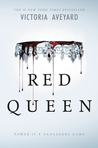
Red Queen (Red Queen, #1)
Red Queen by Victoria Aveyard
4/5 stars
Oh, I loved this one!  A bit predictable, but I thought it still had something more than most dystopian/special powers books I've read lately.  I really liked the main character, Mare, and even though she is clearly in a battle with herself over a boy, it wasn't over the top and too romantic.  The conflict between classes was an interesting one.  I'm looking forward to reading #2!

Currently Reading

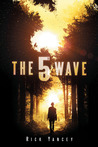
The 5th Wave (The 5th Wave, #1)
The 5th Wave by Rick Yancey
I bought this book when it first came out and like so many others, it got put to the side.  So many books... you know the story.  But my brother asked to borrow it so I figured I should read it.  Glad I'm finally getting to it!  The nice thing is I have the second one waiting and then only a couple of months before the third one comes out.  I like that waiting period!

It's Spring Break, so I should have lots of time to read, right?  Nope.  Looking at my schedule and trying to figure out where I'm going to find time.  Why do we always fill every available time with things to do?  Here's to reading!

Friday, March 18, 2016

Spotlight Friday - The Writer's Life 3.18.16


Time to get ready for the weekend!
Kick up your feet and find a good place to read.
Sharing #booklove for your classroom or library.
Spotlighting a book or two because these books deserve the spotlight!


Last week I spotlighted books you can use to show a Readerly Life.
This week I am sharing books that you may want to have to spotlight throughout the year what a writer does.

Written and Drawn by Henrietta
Written and Drawn by Henrietta 
by Liniers
What a lovely book to use for Writer's Workshop!

The Whisper
The Whisper 
by Pamela Zagarenski
Imagination and the power of making your own story.

Billy's Booger
Billy's Booger: A Memoir (sorta)
by William Joyce
Creativity and memoir writing!

Rufus the Writer
Rufus the Writer
by Elizabeth Bram
Write for yourself.  Write for others.

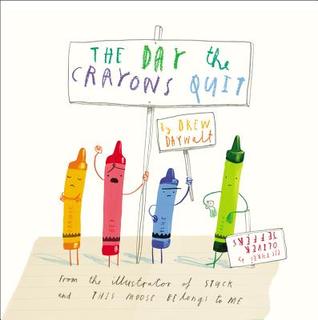
The Day the Crayons Quit
by Drew Daywalt
The power of persuasive writing!

One Word from Sophia
One Word From Sophia 
by Jim Averbeck
How word choice is important, and more opinion writing!

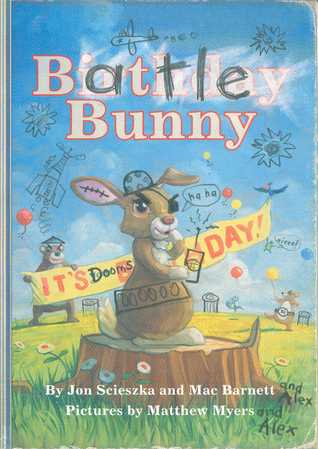
Battle Bunny
Battle Bunny
by Jon Scieszka and Mac Barnett
Make the story your own :)

Little Red Writing
little Red Writing
by Joan Holub
Word choice and puns, oh my!

What Do You Do with an Idea?
What Do You Do With an Idea?
by Kobi Yamada
Ideas sometimes need time to grow.

Inside My Imagination
by Marta Arteaga
The power of the imagination.

What picture books do you share about writing?

Wednesday, March 16, 2016

Nonfiction Picture Book Wednesday 3.16.16 Strong, American Women

Every Wednesday I join Alyson Beecher from kidlitfrenzy and other
kidlit bloggers to share wonderful nonfiction picture books.
The intention of today's blog is to give educational professionals
new nonfiction reading material and ideas to use 
with students to promote a love of reading nonfiction materials.

It seems that publishers were trying to get books out about strong women in time for March's Women's History Month!  During the past few weeks, I read some great picture book biographies about strong, American woman.  
As I read these books, I noticed they could be used for a variety of purposes.  Check out these books and then see how you can use them as mentor texts or to talk about the person through character traits and theme purposes.

Miss Mary Reporting: The True Story of Sportswriter Mary Garber
Miss Mary Reporting
written by Sue Macy
illustrated by C.F. Payne
published by Simon and Schuster/Paula Wiseman Books
I wrote more about this book here.

Solving the Puzzle Under the Sea: Marie Tharp Maps the Ocean Floor
Solving the Puzzle Under the Sea 
written by Robert Burleigh
illustrated by Raul Colon
published by Simon and Schuster/Paula Wiseman Books

Fearless Flyer: Ruth Law and Her Flying Machine
Fearless Flyer
written by Heather Lang
illustrated by Raul Colon
published by Calkins Creek, an imprint of Highlights

Dorothea's Eyes: Dorothea Lange Photographs the Truth
Dorothea's Eyes
written by Barb Rosenstock
illustrated by Gerard DuBois
published by Calkins Creek, an imprint of Highlights

Mentor Text for Reading/Writing

  • What point of view is the book told through?  How does it make a difference in the story?  Do you think when it is told through 1st point of view, does it take liberties in that the author is making potential guesses at what the person may or may not have said?
  • Look at the illustrations, what information do they add to the text?  Since Solving the Puzzle Under the Sea and Fearless Flyer have the same illustrator, do you notice differences between illustrations?  
  • Take a look at the end notes.  Which ones do you find most useful?  Which ones serve a purpose for author research?
  • When you read narrative biographies, how do you gain information?
Using the text to talk about the person
  • Each book has to do with the person's passion - how they followed their passion to their dreams.  However, the road to get to their destination was different for each female.  Compare/contrast.
  • Look at character traits of each person and compare and contrast.
  • Use these books to talk about the themes of determination, following your dream, crossing boundaries.
Goodreads Summaries:

Miss Mary Reporting
While sitting in the bleachers of a Soap Box Derby in the 1950s, Mary Garber overheard two African-American boys in the following exchange: “See that lady down there?” asked one boy. “That’s Mary Garber. She doesn’t care who you are, but if you do something good, she’ll write about you.”

Mary Garber was a pioneering sports journalist in a time where women were rarely a part of the newspaper business. Women weren’t even allowed to sit in the press boxes at sporting events, so Mary was forced to sit with the coaches’ wives. But that didn’t stop her.

In a time when African-American sports were not routinely covered, Mary went to the games and wrote about them. Garber was a sportswriter for fifty-six years and was the first woman to receive the Associated Press Sports Editors’ Red Smith Award, presented for major contributions in sports journalism. And now, every year the Association of Women in Sports Media presents the Mary Garber Pioneer Award in her honor to a role model for women in sports media.

Sure to inspire future journalists, athletes, and any child who has a dream, this illustrated biography of Mary Garber captures her feisty and determined spirit and brings her story to life.

Solving the Puzzle Under the Sea
Marie Tharp was always fascinated by the ocean. Taught to think big by her father who was a mapmaker, Marie wanted to do something no one had ever done before: map the bottom of the Atlantic Ocean. Was it even possible? Not sure if she would succeed, Marie decided to give it a try.

Throughout history, others had tried and failed to measure the depths of the oceans. Sailors lowered weighted ropes to take measurements. Even today, scientists are trying to measure the depth by using echo sounder machines to track how long it would take a sound wave sent from a ship to the sea floor to come back. But for Marie, it was like piecing together an immense jigsaw puzzle.

Despite past failures and challenges—sometimes Marie would be turned away from a ship because having a woman on board was “bad luck”—Marie was determined to succeed. And she did, becoming the first person to chart the ocean floor, helping us better understand the planet we call home.

Fearless Flyer
On November 19, 1916, at 8:25 a.m., Ruth Law took off on a flight that aviation experts thought was doomed. She set off to fly nonstop from Chicago to New York City. Sitting at the controls of her small bi-plane, exposed to the elements, Law battled fierce winds and numbing cold. When her engine ran out of fuel, she glided for two miles and landed at Hornell, New York. Even though she fell short of her goal, she had broken the existing cross-country distance record. And with her plane refueled, she got back in the air and headed for New York City where crowds waited to greet her. In this well-researched, action-packed picture book, Heather Lang and Raúl Colón recreate a thrilling moment in aviation history. Includes an afterword with archival photographs.

Dorothea's Eyes
After a childhood bout of polio left her with a limp, all Dorothea Lange wanted to do was disappear. But this desire not to be seen helped her learn how to blend into the background and observe others acutely. With a passion for the artistic life, and in spite of her family’s disapproval, Dorothea pursued her dream to become a photographer and focused her lens on the previously unseen victims of the Great Depression. This poetic biography tells the emotional story of Lange’s evolution as one of the founders of documentary photography. It includes a gallery of Lange’s photographs, and an author’s note, timeline, and bibliography.